

By
Richard C. Vara M.A.

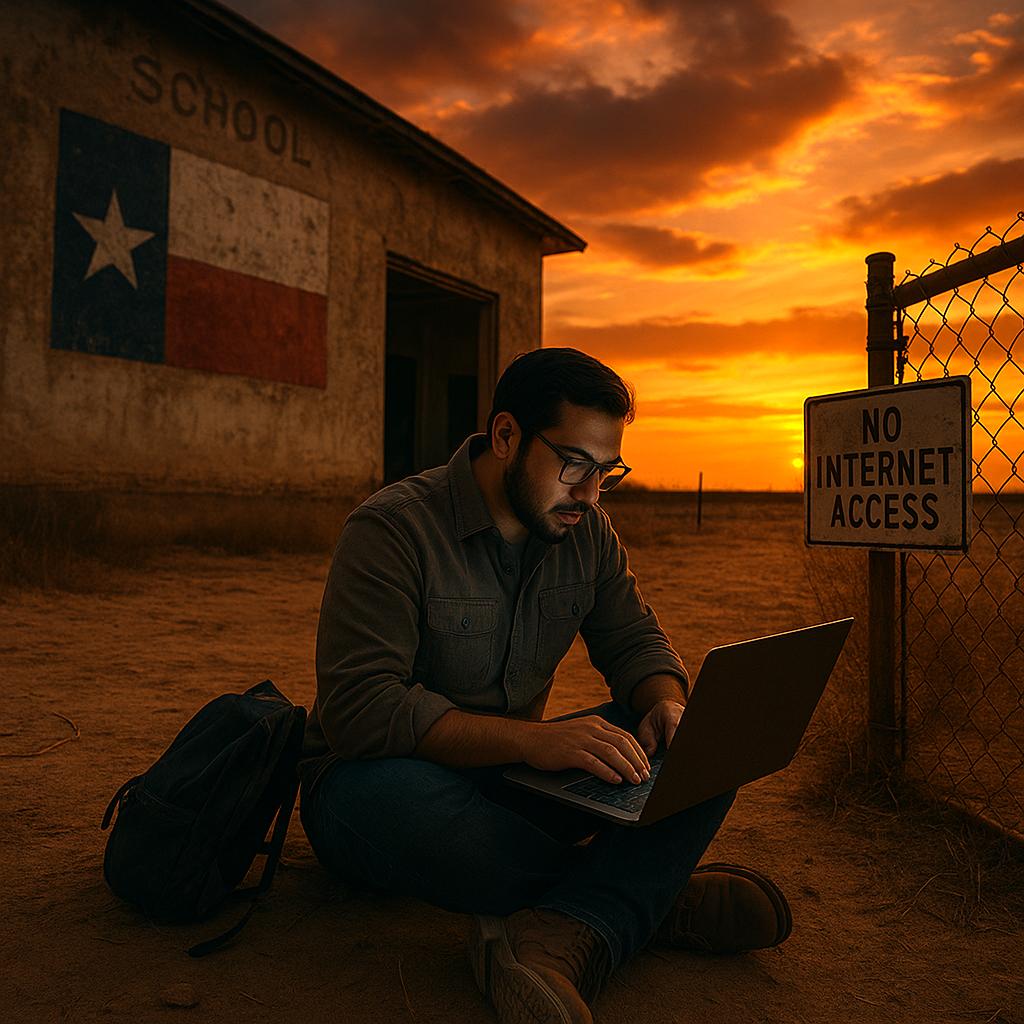
HOUSTON — Texas ranks near the bottom in national digital access for students, even as it boasts one of the world’s largest economies and a booming tech sector — a disparity that’s leaving many low-income and minority students without the tools needed to succeed in today’s digital classrooms.
As of 2023, Texas ranked 46th in internet access, 45th in broadband connectivity, and 46th in computer availability, according to state and nonprofit data. A report by the Community Tech Network revealed that one-third of Texas school-age children still lack either high-speed internet or a personal computer at home.
“This isn’t just a digital issue — it’s an educational equity and social justice crisis,” said Richard Vara, a doctoral student at St. Bonaventure University who analyzed the data. “In a state as wealthy and technologically advanced as Texas, there is no excuse for this kind of disparity.”
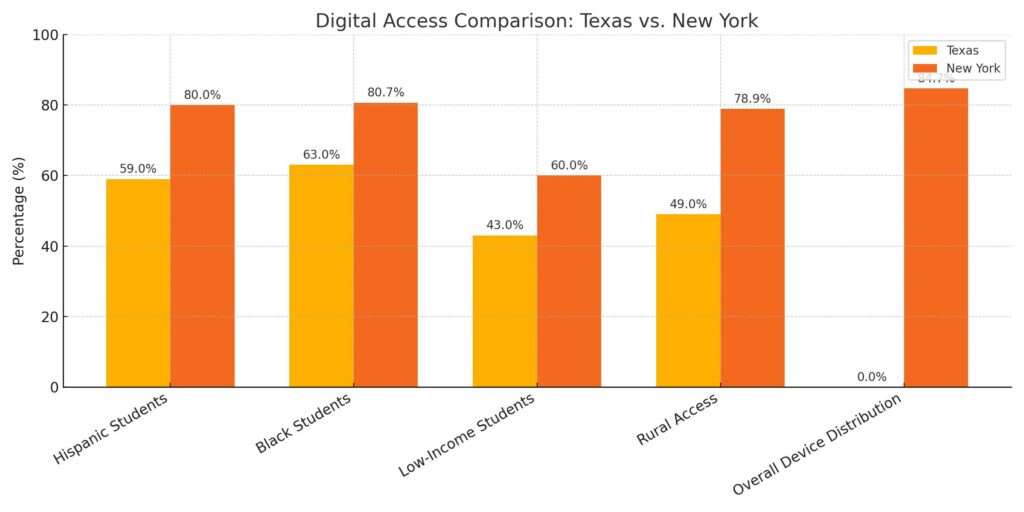
The contrast is especially stark when compared to New York, which has implemented statewide digital access policies. According to the New York State Education Department (NYSED), 84.7% of surveyed students across the state were issued school-owned devices during the 2023–2024 school year. In Texas, no statewide 1:1 device program exists.
Here’s how the numbers stack up:
- Hispanic students: 59% in Texas have both broadband and a computer vs. 79.9% in New York receiving a school-issued device.
- Black students: 63% in Texas have broadband and a computer vs. 80.6% in New York receiving a device.
- Low-income students: Only 43% in Texas report having both broadband and a computer; in New York, 4 in 10 low-income students still face tech barriers — but that number is decreasing due to state efforts.
- Rural students: In East Texas, just 49% of students have adequate digital access, compared to 78.9% of rural students in New York receiving school-issued devices.
Texas’ economic muscle makes the gap even harder to justify. With a gross domestic product of $2.694 trillion — eighth in the world if compared to nations — and a thriving tech industry, the state has the financial and technological capacity to lead in digital access.
“Texas can do better. It has the resources, but what it lacks is a coordinated statewide plan,” Vara said.
Misinformation adds another layer to the issue. Studies cited in Vara’s report found that students without digital literacy education are more vulnerable to algorithm-driven misinformation on platforms like TikTok, Instagram and X.
“Students are using social media as their primary news source,” Vara said. “Without critical media training, they’re left to figure out what’s real — and what’s not — on their own.”
Vara recommends that Texas adopt models similar to New York’s, including state-funded device programs, expanded broadband access in rural areas, and culturally responsive media literacy curricula. He also supports piloting solutions using the Plan-Do-Study-Act model to target districts with the greatest need.
“This isn’t just about closing the homework gap — it’s about preparing students to thrive in a digital society and fight misinformation,” Vara said. “If we’re serious about equity, we have to start with access.”
