

By Richard C. Vara, M.A.
Editor-in-Chief, The VCR Show

June 19, 2025
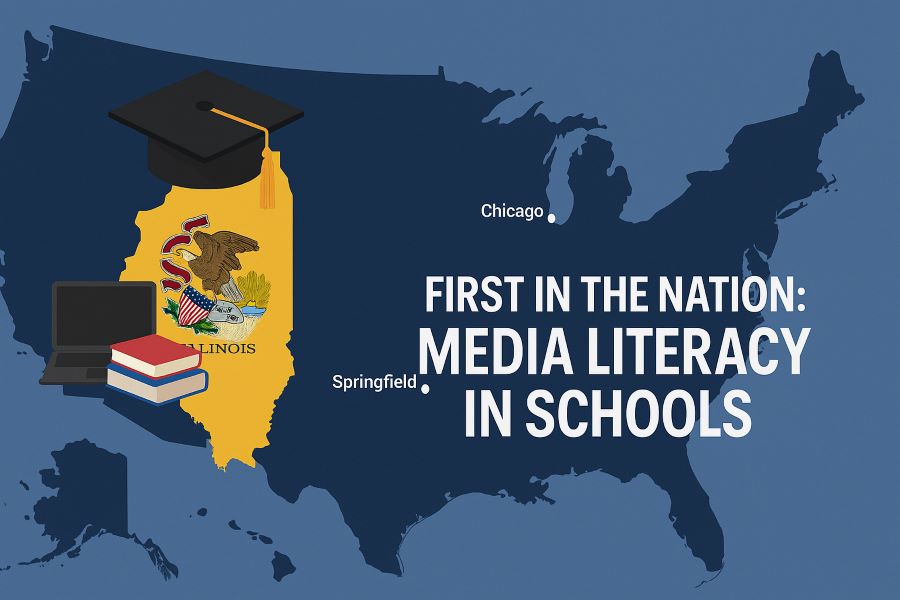
SPRINGFIELD, Ill. — Illinois made history in 2021 as the first state in the nation to require media literacy instruction in all public high schools. But nearly three years after the passage of Public Act 102-0055, questions remain about whether the law is delivering on its promise.
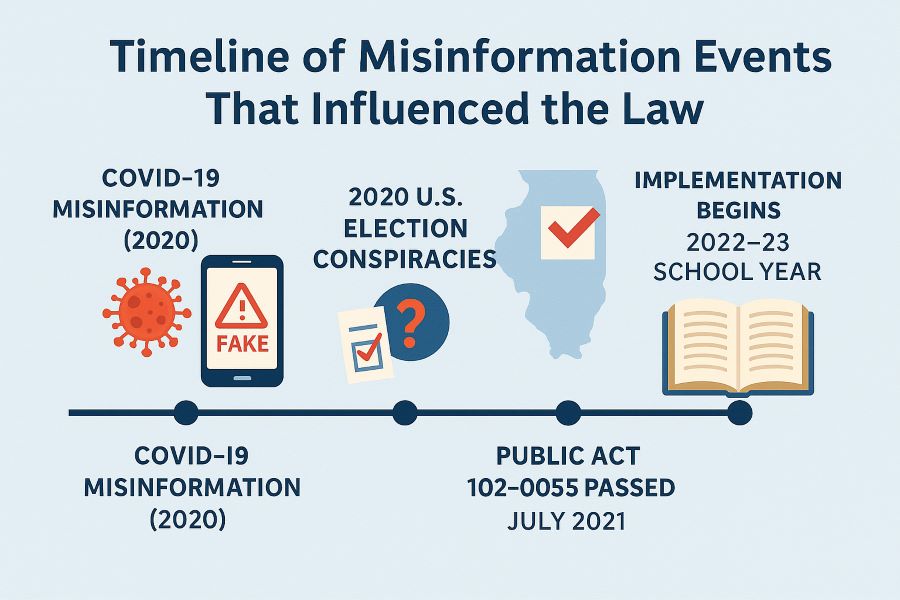
The law, which took effect during the 2022–2023 school year, mandates that high schools teach students how to analyze, evaluate, and create media responsibly. The goal: prepare young people to navigate an online world increasingly saturated with misinformation.
“The intent was to create critical thinkers who can participate meaningfully in democracy,” said State Sen. Karina Villa, a key sponsor of the bill.
However, the legislation came with no funding, no mandated curriculum, and no required assessments — leaving implementation to local districts. That flexibility, while appealing to some, has resulted in widespread disparities across Illinois.

A Pulitzer Center report from 2023 revealed that wealthier districts were able to quickly integrate media literacy lessons, while underfunded schools struggled due to lack of training and digital resources.
“Right now, the experience of learning media literacy depends entirely on your ZIP code,” said education advocate Michael Spikes, co-founder of the Illinois Media Literacy Coalition.
The law defines media literacy broadly, touching on five core areas: accessing and evaluating information, analyzing messages, creating content, engaging ethically, and taking social action. Yet without a statewide framework or required teacher training, educators report feeling overwhelmed.
“Teachers are already stretched thin,” said Erin Cooper, an education reporter who has covered the law’s rollout. “Asking them to teach a whole new subject without support is a recipe for uneven results.”
Beyond implementation gaps, the policy also faced political pushback. While the bill passed largely along party lines, some lawmakers expressed concern that media literacy could be used to promote ideological bias.
Supporters counter that the law avoids partisan pitfalls by focusing on critical thinking skills — not content control.
“Media literacy is about helping students question everything, regardless of their politics,” Villa said.
Despite its challenges, experts agree the legislation is a step in the right direction. The National Association for Media Literacy Education and international models in Finland and Australia support Illinois’ decision to embed media literacy across subjects like civics and English.
Still, advocates say success depends on sustained investment.
“Passing a law is just the beginning,” said Katherine Brisson-Boivin of the Centre for International Governance Innovation. “We need funding for teacher training, digital infrastructure, and curriculum support — otherwise the effort will fall flat.”
Without statewide standards, some students may graduate with robust media fluency, while others remain vulnerable to online manipulation.
As misinformation continues to impact elections, public health, and civic life, calls for national media literacy policy are growing louder.
“Illinois took a bold first step,” said Spikes. “Now we need to make sure that every student benefits — not just those in the best-funded schools.”
